Lawmaker questions credibility of housing agencies
Published: 2/9/2026, 12:15:13 PM
Word Count: 762 words
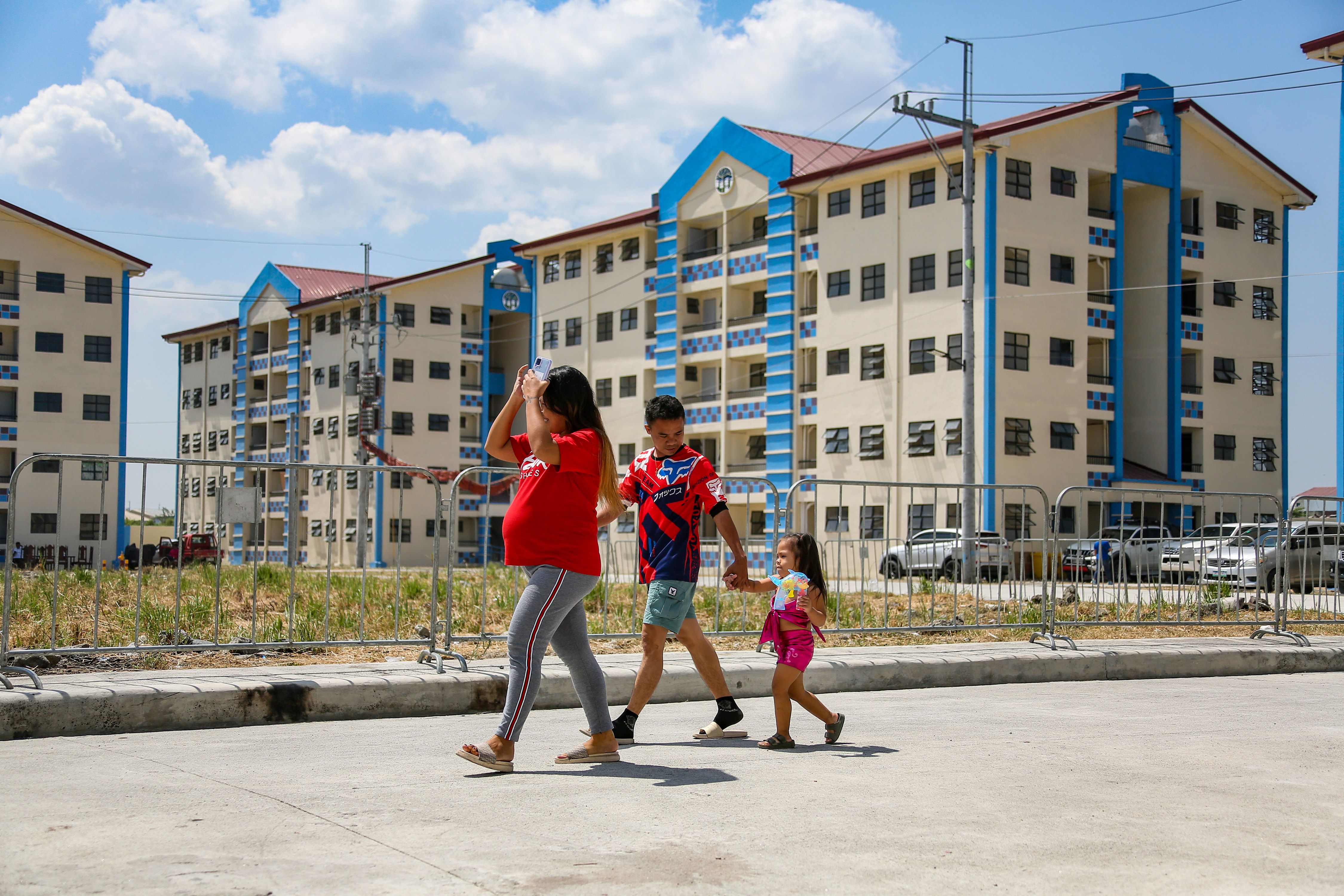 Residents walk past the St. Gregory Homes Project in Barangay Panghulo, Malabon City on March 27, 2023. Jonathan Cellona, ABS-CBN News/PPA pool/file
MANILA — The Association of Philippine Electric Cooperatives (APEC) Partylist Representative Sergio Dagooc on Monday delivered a privilege speech at the House of Representatives warning of what he called a “housing crisis within the housing bureaucracy.”
He argued that government agencies tasked to solve the country’s housing backlog are undermined by the fact that many of their employees do not own homes.
In his address, Dagooc questioned how housing agencies could credibly address the national housing shortage when a significant portion of their workforce remains renters, sharers, or occupants of insecure housing.
“How can we ask government employees to provide the nation with houses when they themselves do not have homes? Iyong mga empleyado po ng mga housing agencies natin, sila mismo walang mga bahay,” Dagooc said.
He noted that many employees of the Department of Human Settlements and Urban Development (DHSUD), the National Housing Authority (NHA), Pag-IBIG Fund, the National Home Mortgage Finance Corporation (NHMFC), and the Social Housing Finance Corporation (SHFC) return each day to rented units, relatives’ homes, or informal settlements.
Citing survey data submitted to his office following budget hearings last year, Dagooc said the numbers reveal a systemic problem inside key shelter agencies.
At DHSUD’s central office, only about 40 percent of surveyed employees fully own their homes, meaning nearly 60 percent do not. At Pag-IBIG Fund, the government’s main housing finance institution, only around 25 percent of employees have housing loans with the agency itself, leaving 75 percent of employees unable or unwilling to avail themselves of its programs.
“These are not just statistics. Behind every percentage point is a human being,” Dagooc said.
“These employees live the daily contradiction of their work. They drop policies on affordable housing that they cannot afford. They process loans they cannot qualify for. They inspect housing units they will never own,” he added.
Gov't raises ceiling prices for socialized housing units as Pag-IBIG keeps low 3 percent rate
In his speech, Dagooc anchored his arguments on constitutional and international standards, citing the Constitution’s mandate for the state to undertake a continuing program of urban land reform and housing, as well as International Labor Organization (ILO) principles recognizing adequate housing as central to social justice.
He also pointed to countries such as Singapore, South Korea, and the Netherlands, where housing agencies ensure that their workforce has access to housing as a prerequisite for credibility.
“This raises a fundamental moral question. What right do we have to ask government employees to work toward a goal we denied them personally?” he said.
To address the issue, Dagooc announced that he would file a House resolution urging DHSUD, NHA, NHMFC, SHFC, and Pag-IBIG Fund to conduct a comprehensive inventory of the housing status of all their employees, including those under contract of service and job order arrangements.
Marcos Jr. inaugurates socialized condo project in Manila
The proposed resolution also calls for priority housing programs for agency personnel, such as preferential loan terms, priority slots in government housing projects, particularly under the Pambansang Pabahay para sa Pilipino (4PH) program, rental subsidies, and employer-assisted housing schemes with salary-integrated payments.
Agencies would be required to submit a detailed report to Congress within 90 days outlining their plans, budgets, and timelines to address the problem.
“This is not asking for special privilege. This is asking for basic fairness,” Dagooc said, stressing that the proposal is about fixing a governance gap rather than elevating government workers above other sectors.
During interpellation, lawmakers sought clarification on whether prioritizing housing agency employees would disadvantage informal settlers and minimum-wage earners. Dagooc rejected that framing, saying the resolution focuses on ensuring that agencies can properly perform their mandates by first addressing internal failures.
“Kapag nakita mo iyong survey nila, at the present situation wherein people working to provide housing for our fellow Filipinos do not have house themselves, may malinaw na krisis,” he said.
“Kasi paano mo maibigay ang isang bagay na wala ka? Ang tinutukoy ko ay hindi mo pwedeng bigyan ng pabahay iyong mga kapwa mo Pilipino kung ikaw mismo walang sariling bahay,” he added.
Other legislators expressed support for the initiative, saying it could help diagnose design flaws in existing housing programs. One lawmaker noted that even if only a minority of employees face housing insecurity, the failure of agencies to track why their workers are not accessing housing programs already constitutes a governance failure.
Pag-IBIG releases more than P140 billion in home loans in 2025
RELATED VIDEO:
Related Articles
- /news/nation/2026/4/4/executive-clemency-hanggang-saan-ang-kapangyarihan-ng-pangulo-0025
- /news/nation/2026/4/3/cardinal-advincula-urges-filipinos-to-pray-for-peace-as-ph-feels-impact-of-middle-east-conflict-2026
- /news/nation/2026/4/3/repatriated-ofws-dependents-from-middle-east-reach-over-4-000-dmw-2006
- /news/nation/2026/4/3/ph-pushes-for-cessation-of-violence-in-myanmar-as-coup-leader-bags-presidency-1936
- /news/nation/2026/4/3/filipinos-mark-good-friday-by-praying-for-end-to-mideast-conflict-1458