Joint House hearings on Middle East crisis response to begin April 8 — Quimbo
Published: 3/31/2026, 9:58:43 AM
Word Count: 1040 words
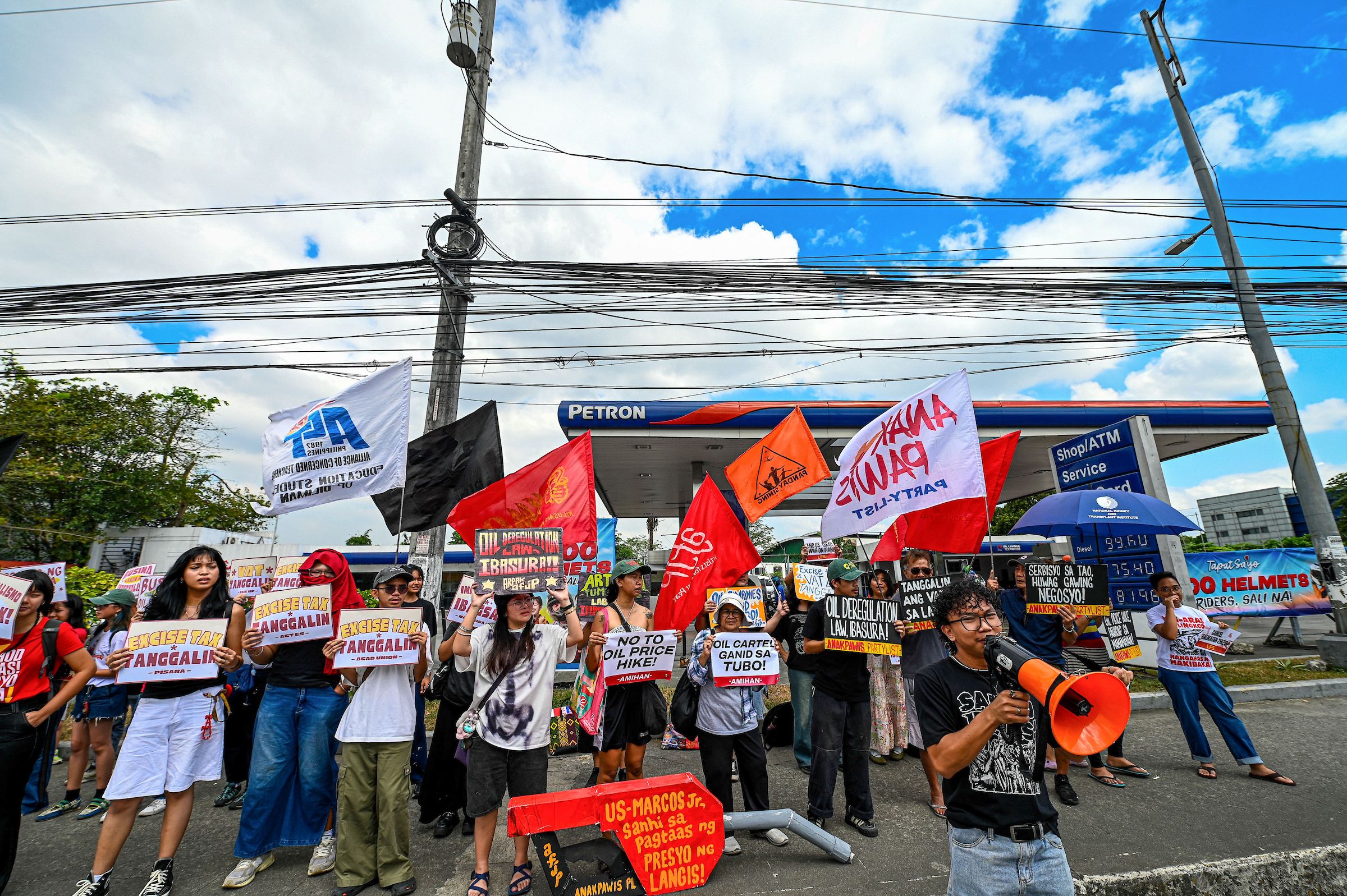 Progressive groups hold a protest on the second day of a transport strike at a gasoline station in Philcoa, Quezon City, calling for government action on rising fuel prices and policies affecting drivers. Maria Tan, ABS-CBN News
MANILA – Joint hearings in the House of Representatives aimed at establishing a legislative response to the ongoing crisis in the Middle East or West Asia will begin on April 8, House Committee on Ways and Means Chairperson Miro Quimbo said Tuesday.
Quimbo said lawmakers are looking at both immediate and long-term measures to make the Philippine economy more resilient to global shocks, including a possible “Bayanihan 3” package that goes beyond direct cash aid.
He explained that the proposed measure would not only provide subsidies to affected sectors but also introduce long-needed structural reforms, including a more efficient system for identifying beneficiaries.
READ: BSP sees inflation climbing to 3.1 to 3.9 pct in March
“Bayanihan 3, in my mind, is not only gathering funds so that you can have ayuda program but actually developing a system whereby you have an electronic subsidy program. Nakakabit siya sa National ID,” Quimbo said.
"Practically everyone has a national ID. Hindi lang doon na-i-integrate ‘yung kanyang economic profile or anong industriya siya… We have to take this opportunity kasi hindi tayo pabalik-balik na each time may subsidy, naghahanap tayo ng panibagong listahan," Quimbo said.
He added that such a system would eliminate the need to repeatedly create new beneficiary lists whenever subsidies are rolled out.
NO NEED FOR NEW LOADS
Quimbo also expressed confidence that the government would not need to incur additional debt to fund Bayanihan 3, citing improved revenue collections.
“[The] government now has enough cash to be able to sustain a program that can help control inflation… We are actually net positive for the first quarter. We have been able to collect or collate money na double than what was accomplished in the first quarter of 2025,” Quimbo said.
But ACT Teachers party-list Rep. Antonio Tinio opposed any move to finance the program through borrowing, warning of the country’s existing debt burden.
“Dapat talaga hindi ipang-utang. Ang nangyari noong pandemic, talagang nabaon sa utang ang Pilipinas. Hanggang ngayon, pinagbabayaran pa ‘yan,” Tinio told reporters on Tuesday.
READ: Small food vendors seek cheaper alternatives as LPG prices soar
He pointed to alternative funding sources such as unprogrammed appropriations, confidential funds, and other allocations in the current budget.
Tinio also urged the Department of Budget and Management to provide a full accounting of available funds before any supplemental budget is considered.
NEW FUNDING SOURCES
Quimbo said lawmakers are also studying potential new funding streams, including a value-added tax (VAT) windfall driven by rising prices of goods.
“You have a VAT windfall because nagtaas ang presyo ng bilihin, tumataas ang VAT. Kailangan makuha natin ‘yung windfall na yan at maitulak siya, maibigay doon sa mga sectors where it is actually needed,” Quimbo said.
He added that gains from foreign exchange movements could also be tapped to support government spending.
“The BSP has been defending the peso in the last several weeks. So the government has been selling its government reserves to be able to do that. But many of those reserves ang bilihan ho at P54, P55. Ngayon, binebenta at 60 thereabout. May windfall din ‘yan… The first task is trying to map out where we can sweep additional funds without affecting current programs,” Quimbo said.
EXPANDED HEARINGS
The joint hearings have been expanded to 13 House committees from the initial five, covering key sectors such as energy, agriculture, labor, transportation, trade, and overseas workers.
Quimbo said the committees would be divided into subgroups to address specific concerns, with the goal of speeding up the formulation of policy responses.
House Speaker Faustino “Bojie” Dy III said the hearings aim to identify solutions in coordination with the executive branch.
“The objective of these hearings is to work with our partners in the Executive to identify solutions, not point fingers… We want to hear directly from our economic managers and frontline agencies so we have the information we need to come with measures that can help our people cope with the impact of the Middle East conflict,” said Dy.
SECURITY MEASURES
Among the proposals being considered are the creation of a national petroleum reserve and the acceleration of alternative energy development, including solar, geothermal, and natural gas.
“Hindi na tayo dapat nagiging dependent sa petroleum. Ongoing ‘yan whether it is solar, geothermal. Mayroon tayo natural gas na nagpu-pump in na galing sa Malampaya. May additional pa diyan. But we need to be able to to fast-track itong mga alternative sources of energy na ito kasi this is how we are able to thrive or survive this,” Quimbo said.
Dy earlier noted that the Philippines imports about 95 percent of its petroleum needs, underscoring the urgency of finding alternatives.
Lawmakers are also studying possible tax incentives for electric vehicle manufacturers and a review of the Oil Deregulation Law.
“I mean it's great for first world countries. It works there because sinasabi ko nga is maganda talaga ang deregulated kasi sila-sila nagbabakbakan. In fact, you see it in some retail areas. Pero ang basic component kasi nawala is that you have a very strong law enforcement mechanism relative to making sure that competition actually takes place,” Quimbo said.
Quimbo cautioned, however, that suspending VAT on fuel and imposing price freezes could be difficult or counterproductive.
“Kung aalisin mo ‘yung VAT on the pump lang, sa gasolinahan, hindi ‘yan magiging 12 percent kasi mga input at output VAT ‘yan na clinaim na o binayaran of previous transactions. So ang sabi nga nila malaki na ‘yung 4 to 5 percent ang maibabawas,” he said.
“[N]akita natin sa karanasan, sa kasaysayan natin, na kapag frineeze mo ang selling price sa abroad is at $120 per barrel, pipilitin natin sila magbenta ng below that, hindi sila magbebenta. At kung walang magbebenta, not only are we going to have a problem of rationing, but more importantly, dahil kaunti ang binebenta, basic law on supply and demand magmamahal siya. So nagiging counterproductive siya,” Quimbo said.
RELATED STORIES:
House reps urge waiver of bank, port fees during Middle East conflict
What assistance does government provide to repatriated OFWs?
Related Articles
- /news/nation/2026/4/3/cardinal-advincula-urges-filipinos-to-pray-for-peace-as-ph-feels-impact-of-middle-east-conflict-2026
- /news/nation/2026/4/3/repatriated-ofws-dependents-from-middle-east-reach-over-4-000-dmw-2006
- /news/nation/2026/4/3/ph-pushes-for-cessation-of-violence-in-myanmar-as-coup-leader-bags-presidency-1936
- /news/nation/2026/4/3/filipinos-mark-good-friday-by-praying-for-end-to-mideast-conflict-1458
- /news/nation/2026/4/3/part-of-naia-terminal-1-arrival-area-ceiling-collapses-on-good-friday-1409