Chinese embassy says Marcos can expel China envoy, dares lawmakers on ‘persona non grata’ threat
Published: 1/29/2026, 1:58:18 AM
Updated: 1/29/2026, 7:29:24 AM
Word Count: 897 words
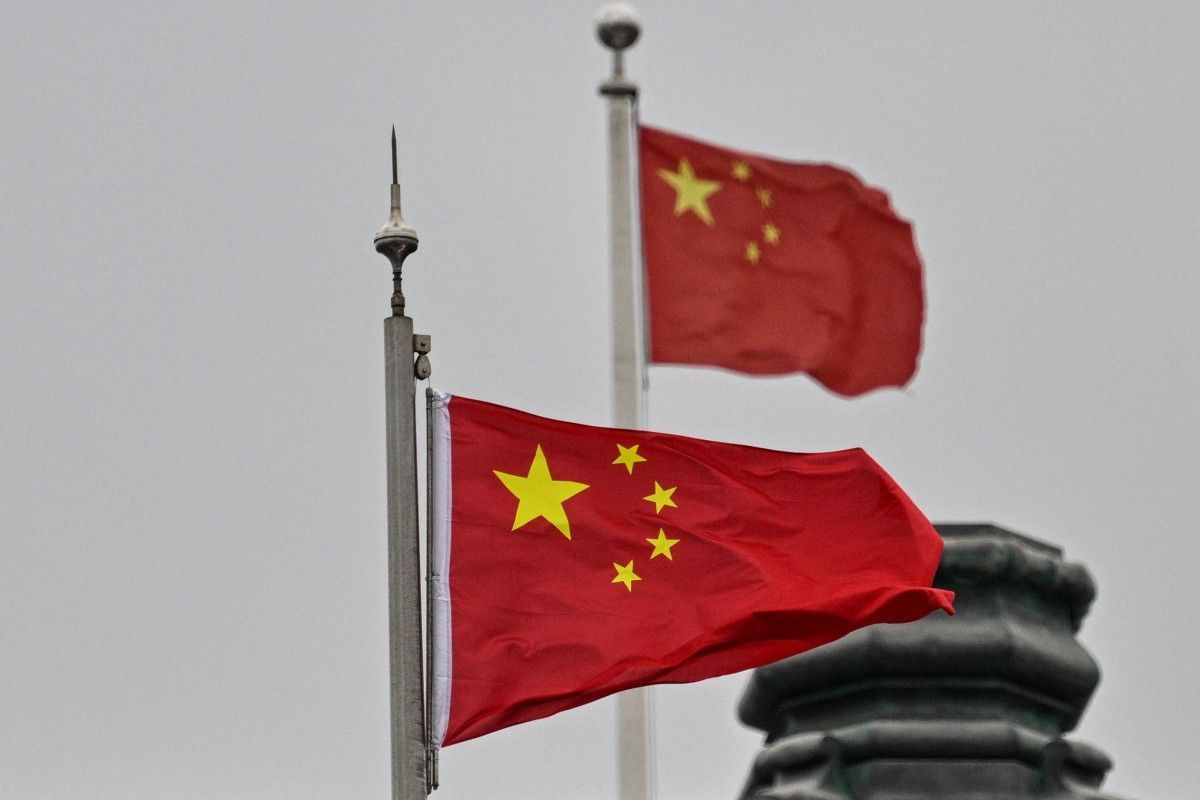
Chinese flags are seen on buildings in the Huangpu district in Shanghai on February 20, 2025. Hector Retamal, AFP/File
MANILA — The Chinese Embassy in the Philippines said President Ferdinand Marcos Jr. can expel Beijing's ambassador, which would be a more "straightforward approach" compared to some Filipino lawmakers' threat to declare an official of the embassy “persona non grata.”
Senate President Vicente Sotto III floated the idea of declaring Chinese embassy Deputy Spokesperson Guo Wei unacceptable and unwelcome after his remarks against some Filipino officials.
Chinese Embassy Spokesperson Ji Lingpeng said “there is no need to go through such trouble” and that lawmakers “could simply declare Ambassador Jing Quan ‘persona non grata’” because “he bears responsibility for all words and actions of the Chinese Embassy.”
He added that Marcos "has the authority" to ask the ambassador to leave.
"If he were to receive such notice from President Marcos, he would depart immediately. But he would do so with immense pride and honor, knowing that through his actions, he has fulfilled the firm commitment a Chinese diplomat makes to his country," the embassy spokesperson said.
Ji added that any persona non grata declaration should “include myself and the entire 12-member media affairs and public diplomacy team.”
“As a team, we stay or leave, together. That said, rest assured that even if the embassy were to be closed, we would continue, without hesitation, to push back slanders and smears against China through various channels,” the spokesperson said.
“This is the most basic duty of Chinese diplomats. If a diplomat cannot even do that, then what is the point of having diplomats at all?" he said.
Ambassador Jing has been in the Philippines for just over a month. In his first public engagement with Philippine media, he said his role was to help “stabilize” bilateral relations between the Philippines and China, while warning that the Embassy would not remain “silent and patient” in the face of what it considers attacks against China.
Lingpeng added that Jing has handled “extremely difficult” postings over his 29-year diplomatic career, including 23 years working on US affairs, and has experienced consulate closures, sanctions, and a wave of anti-China legislation. Yet, Jing never backed down from defending China’s interests.
‘LAST RESORT’
Meanwhile, Malacañang said declaring foreign diplomats in the country as persona non grata was only “an option of last resort.”
“The declaration of persona non grata is one of the most severe forms of diplomatic action that can be imposed by the government against foreign diplomatic personnel,” Communications Undersecretary Claire Castro said, quoting a message from the Department of Foreign Affairs (DFA).
“While it is within the remit of the DFA, such an action is an option of last resort, second only to downgrading of relations, when diplomatic relations with a certain country has seriously fractured that no intervening remedy can stabilize the interaction and engagement,” she told Palace reporters.
The declaration of persona non grata “should not be made lightly and decided only with careful and clear thought and preparedness for how it will shape the Philippines' strategic interests moving forward,” Castro said.
DFA officials are “in direct communication with the Chinese government on various bilateral and international issues that are of great importance to the Philippines,” she said.
“It is hoped that the DFA would be provided with ample space to perform its functions and to sort out issues with foreign counterparts through dialogue and consultation rather than through public discourse, in accordance with the President's vision and guidance as the architect of Philippine foreign policy,” Castro said.
President Ferdinand Marcos Jr. is in close contact with DFA Secretary Theresa Lazaro to discuss the issue and the possible policies that will ensue from it, she said.
The public exchanges were triggered after coast guard spokesperson Commodore Jay Tarriela delivered a seminar before university students in Manila, where the Chinese Embassy claimed he had “openly attacked and smeared” Chinese President Xi Jinping.
The Embassy said the remarks crossed a “red line,” prompting a series of strongly worded public exchanges between Tarriela and China’s Embassy deputy spokesperson Guo Wei.
Several senators reacted to the heated back-and-forth.
Senator Risa Hontiveros called the Chinese Embassy a “bad guest,” a remark the Embassy later described as “arrogant, ignorant, and paranoid.”
Chinese embassy claims Tarriela ‘attacking and smearing’ China
Meanwhile, Sen. Francis Pangilinan said that “no foreign mission may dictate what Filipino senators can or cannot say in the lawful performance of their official duties.” Sen. Erwin Tulfo told Chinese diplomats, “Layas!”, adding they were free to leave if they did not like how democracy works in the Philippines.
The Department of Foreign Affairs (DFA) backed Philippine officials, saying it had made firm representations with the Chinese Embassy to reiterate the Philippines’ position in the West Philippine Sea, while also calling for sobriety. China, meanwhile, lodged objections with Malacañang, the DFA, and the coast guard, and summoned Philippine Ambassador to China Jaime FlorCruz in Beijing.
At least 15 Philippine senators later signed a resolution opposing what they described as “derogatory” statements by the Chinese Embassy directed at Philippine officials.
AFP monitors 55 Chinese vessels in West Philippine Sea in past week
DOT: Visa-free entry for Chinese travelers seen to boost PH tourism
15 Filipino sailors rescued by China coast guard back in Manila
Related Articles
- /news/nation/2026/4/3/filipinos-mark-good-friday-by-praying-for-end-to-mideast-conflict-1458
- /news/nation/2026/4/3/part-of-naia-terminal-1-arrival-area-ceiling-collapses-on-good-friday-1409
- /news/nation/2026/4/3/marcos-urges-filipinos-to-live-with-greater-faith-humility-compassion-on-good-friday-1052
- /news/nation/2026/4/3/-may-mga-buhay-po-na-nabago-devotees-fill-quiapo-streets-for-good-friday-procession-0833
- /news/nation/2026/4/2/cardinal-advincula-washing-of-the-feet-highlights-humility-hope-amid-trials-2300